Buy whatdreamsmaycome.eu ?
We are moving the project
whatdreamsmaycome.eu .
Are you interested in purchasing the domain
whatdreamsmaycome.eu ?
domain@kv-gmbh.de · 0541-91531010
Buy whatdreamsmaycome.eu ?
What signs are noticeable after the crankshaft sensor has been replaced?
After the crankshaft sensor has been replaced, noticeable signs may include improved engine performance, smoother idling, and better fuel efficiency. The engine may also start more easily and the vehicle may experience fewer instances of stalling or misfiring. Additionally, any previous issues with the engine's timing or ignition system may be resolved. **
Where is the crankshaft sensor located on a 2004 Audi A6 2.4 V6 with 177 horsepower?
The crankshaft sensor on a 2004 Audi A6 2.4 V6 with 177 horsepower is typically located near the bottom of the engine, behind the crankshaft pulley. It is usually mounted on the engine block or the transmission bell housing, close to where the crankshaft is located. To access the crankshaft sensor, you may need to remove some components such as the engine cover or other parts to reach it. **
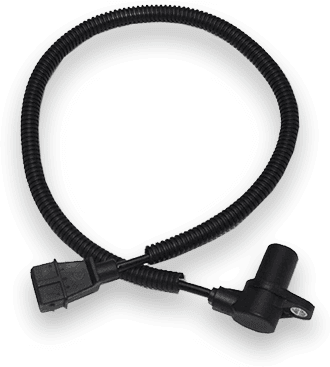

Similar search terms for MAXGEAR-24-0376-Crankshaft-sensor
Top-Angebote
Products related to MAXGEAR-24-0376-Crankshaft-sensor:
-
MAXGEAR 24-0219 Crankshaft sensorSupplementary Article / Supplementary Info Info 2: without cable; Number of pins: 3; Voltage [V]: 12; TecDoc Engine Number: 24320, 22641, 22181, 25678, 24760, 24597, 22172, 24656, 22171, 24753, 24758, 24759, 24873, 24761, 24888, 24892, 24893, 24926, 24942, 20936, 24957, 24960, 22660, 24993, 20795, 20732, 25215, 23089, 25421, 25428, 25429, 25430, 25770, 23735, 25677, 26318, 24944, 25730, 25726, 25679, 21117, 25736, 25667, 21116, 25737, 22664, 20005, 26226, 26327, 17374, 17376, 19706, 22955, 20714, 22170, 22658, 20400, 18191, 18995, 23099, 22666, 18928, 18905, 18927, 20108, 20089, 19711, 21315, 20113, 20601, 20006, 20007, 19876, 19901, 20733, 20207, 20594, 20090, 20940, 20599, 20590, 28001, 21316, 20793, 20937, 21113, 26335, 20600, 20865, 19902, 20902, 20943, 20938, 25668, 21029, 21114, 21172, 22659, 21174, 21175, 21177, 21178, 22636, 20796, 21318, 21357, 27056, 21065, 20602, 22389, 22390, 20864, 21064, 23106, 23311, 23926, 23930, 23856, 23971, 23972, 23973, 23974, 24142, 25674, 24319, 24317, 22672, 24757, 24394, 24387, 24396, 25768, 28253, 28254, 26535, 25669, 26889, 26891, 27055, 27526, 22637, 21590, 27966, 29520, 28421, 28876, 32543, 29254, 29239, 29256, 29255, 29309, 29593, 29439, 29596, 29592, 29600, 32702, 29604, 32700, 29689, 29745, 30244, 30615, 32806, 31344, 31348, 32166, 32594, 33006, 24397, 25216, 24964, 27356, 33114; Required quantity: 2, 1, 4; Engine Code: MCN.RB, CETA, CKVB, CKVC, CDUD, CRCD, CRCA, CGXC, CTUB, CTTA, CGWD, CBFA, CCZA, CLZB, CTBB, CGYA, MCG.EA, CGWC, CREC, CTWB, CRED, BKH, CCTA, CAWB/CCTA/CCZA, CAWB/CCTA, CDAA, CGKA, CCWA, BZB, CHMB, CCTB, CCZC, CCLA, CDHA, CCMA/CNRB, CAEA, CFKA, CAEB, CPNB, CASC, CGKB, CCBA, CDYC, CTDA, CPMA, CARB, CCFC, CTYA, CNRB, CGEA, CMHA, CDTC, CHVA, CJWC, CJWB, CNAA, CTWA, CJMA, CVUC, CTVA, CVBA, CTXA, CAED, MCG.FA; Construction Year from: 06/2006, 05/2006, 01/2009; Vehicle Identification Number (VIN) from: 4F7000001; Emissions Standard: Euro 527,99 £*Shipping: 8,45 £Secure redirect to the provider
-
MAXGEAR 24-0258 Crankshaft sensorSupplementary Article / Supplementary Info Info 2: with cable; Number of pins: 2; Connector Shape: round; Construction Year from: 07/1993, 09/1993; Construction Year to: 08/1996, 08/1995, 09/1996, 05/1997, 04/2000, 02/2001; TecDoc Engine Number: 2131, 2133; Vehicle Equipment: for vehicles without immobilizer; Transmission Type: Automatic Transmission, Manual Transmission; Engine Number to: ..042151, ..004555; Fitting Position: Rear48,49 £*Shipping: 8,45 £Secure redirect to the provider


-
What is the difference between a kickstart crankshaft and an electric start crankshaft?
A kickstart crankshaft is designed to be manually started by using a kick lever, requiring physical effort from the rider to start the engine. On the other hand, an electric start crankshaft is equipped with an electric starter motor that allows the rider to start the engine with the push of a button, without the need for physical exertion. Electric start crankshafts are typically found on more modern motorcycles, offering convenience and ease of use compared to kickstart crankshafts. **
-
How does the crankshaft slide horizontally?
The crankshaft slides horizontally through the use of bearings and lubrication. The bearings are placed at specific points along the crankshaft to reduce friction and allow for smooth horizontal movement. Additionally, lubrication is applied to the bearings to further reduce friction and ensure the crankshaft can slide easily. This horizontal movement is essential for the crankshaft to transfer the up-and-down motion of the pistons into rotational motion. **
-
How can the crankshaft be filed?
The crankshaft can be filed by using a precision file to remove any burrs, nicks, or imperfections on the surface. It is important to use a file that is specifically designed for metalworking and to work carefully and methodically to avoid damaging the crankshaft. The filing process should be done with the crankshaft securely held in place to prevent any movement or flexing. After filing, the crankshaft should be thoroughly cleaned and inspected to ensure that the filing has achieved the desired result. **
-
"Can the original crankshaft handle it?"
The original crankshaft may or may not be able to handle it, depending on the specific circumstances. Factors such as the engine's power output, the type of modifications being made, and the condition of the original crankshaft will all play a role in determining whether it can handle the changes. It's important to consult with a knowledgeable mechanic or engineer to assess the crankshaft's capabilities and determine if any upgrades or replacements are necessary. **


What is the RPM of the crankshaft?
The RPM (Revolutions Per Minute) of the crankshaft is a measure of how fast the engine's crankshaft is rotating. The RPM of the crankshaft can vary depending on the engine speed and gear ratio. In a typical car engine, the crankshaft RPM can range from around 600 RPM at idle to over 6000 RPM at full throttle. The RPM of the crankshaft is an important factor in determining the engine's power output and performance. **
How can the crankshaft gear be saved?
The crankshaft gear can be saved by ensuring regular maintenance and inspections are carried out to detect any signs of wear or damage early on. It is important to use high-quality lubricants and ensure proper lubrication to reduce friction and wear on the gear. Additionally, avoiding excessive loads and sudden changes in speed can help prolong the life of the crankshaft gear. If any issues are detected, it is important to address them promptly to prevent further damage and ensure the gear's longevity. **
Top-Angebote
Products related to MAXGEAR-24-0376-Crankshaft-sensor:
-
MAXGEAR 24-0149 Crankshaft sensorSupplementary Article / Supplementary Info Info 2: with screw; Supplementary Article / Supplementary Info Info 2: without cable; Length [mm]: 48; Number of pins: 3; Vehicle Equipment: for vehicles without start-stop function, for vehicles without brake energy recovery; Construction Year from: 11/2010, 11/2011, 05/2004, 05/2006, 04/2005, 09/2006, 06/2003, 06/2004, 01/2005, 10/2006, 03/2006, 11/2005, 06/2007, 11/2004, 10/2005, 06/2005, 11/2006, 06/2006, 03/2008, 02/2006, 10/2003, 03/2010, 02/2008, 10/2002, 08/2009, 09/2009, 08/2008, 11/2008, 05/2009, 01/2010, 11/2009, 09/2012, 05/2012, 02/2007; Construction Year to: 02/2013, 05/2006, 03/2013, 04/2015, 05/2014, 11/2015, 09/2010, 11/2013, 07/2016, 04/2007, 07/2007, 03/2002, 06/2008, 10/2003, 04/2005, 02/2005, 06/2005, 07/2011, 06/2006, 05/2010, 10/2005, 10/2008, 12/2008, 11/2008, 07/2006, 02/2006, 05/2007, 03/2009, 12/2007, 01/2009, 05/2011, 10/2007, 10/2006, 09/2003, 06/2010, 09/2011, 05/2008, 04/2008, 05/2009, 06/2009, 05/2005, 08/2010, 09/2006, 03/2010, 11/2012, 02/2012, 08/2012, 04/2013, 01/2013, 07/2008, 05/2004, 11/2006, 11/2009; Vehicle type: Caravelle, Roomster, OctaviaScout, Crafter30, Crafter28, Crafter50, Crafter35, Caddy, <Fox1.6>, <CrossFox1.6>, Fabia, AlteaXL, FabiaScout, CaddyMaxi, AlteaFreetrack, Transporter, California; Engine Code: CLCA, CFFA, BKY, BKD/CFHC/CLCB, BWK/CAVA, CBBB/CFGB, CAVA, CAGB/CJCB, CAHA/CGLB, CAGC/CJCC, BUD, CAVD/CNWA/CTKA, CKMA, CAAA, CAAB; TecDoc Engine Number: 19091, 20513, 18696, 20494, 18154, 20495, 16430, 18750, 16462, 18739, 17025, 17027, 17069, 17401, 20713, 18100, 17048, 18202, 17079, 18224, 18908, 17357, 20823, 22657, 17026, 18009, 17080, 18135, 18157, 20514, 18188, 17468, 18907, 20493, 18225, 18727, 18748, 19092, 16862, 18891, 18892, 18893, 18894, 18977, 18991, 18471, 18910, 18482, 20801, 20802, 18268, 19819, 18911, 20811, 20803, 20806, 20808, 19427, 20735, 18470, 18269, 21076, 17500; for OE number: 036906433E; Transmission Type: Manual Transmission; Vehicle Identification Number (VIN) from: 6Y54421760, 1K..7B066001, 1K..7P010001, 1K..7U009001, 1K..7W082001; Vehicle Identification Number (VIN) to: 6Y7B452576, 9N..2D070000, 9N..2Y090000, 8P..4..103000, 1K..5..600000, 5Z..60050000, 5Z..64196000, 1T..8..080000, 9N..7B004140, 9N..7D036872, 9N..7Y098697, 6Y..7B452576, 6L..7..098500, 5Z-6P002635, 5Z-64196000, 5Z-74001440, 9N..7P000809, 5P..7..031000, 1P..7..049500, 5J..75011488; for PR number: 7L3; Emissions Standard: Euro 5, Euro 4 (D4), Euro 4/Euro 524,99 £*Shipping: 8,45 £Secure redirect to the provider
-
MAXGEAR 24-0219 Crankshaft sensorSupplementary Article / Supplementary Info Info 2: without cable; Number of pins: 3; Voltage [V]: 12; TecDoc Engine Number: 24320, 22641, 22181, 25678, 24760, 24597, 22172, 24656, 22171, 24753, 24758, 24759, 24873, 24761, 24888, 24892, 24893, 24926, 24942, 20936, 24957, 24960, 22660, 24993, 20795, 20732, 25215, 23089, 25421, 25428, 25429, 25430, 25770, 23735, 25677, 26318, 24944, 25730, 25726, 25679, 21117, 25736, 25667, 21116, 25737, 22664, 20005, 26226, 26327, 17374, 17376, 19706, 22955, 20714, 22170, 22658, 20400, 18191, 18995, 23099, 22666, 18928, 18905, 18927, 20108, 20089, 19711, 21315, 20113, 20601, 20006, 20007, 19876, 19901, 20733, 20207, 20594, 20090, 20940, 20599, 20590, 28001, 21316, 20793, 20937, 21113, 26335, 20600, 20865, 19902, 20902, 20943, 20938, 25668, 21029, 21114, 21172, 22659, 21174, 21175, 21177, 21178, 22636, 20796, 21318, 21357, 27056, 21065, 20602, 22389, 22390, 20864, 21064, 23106, 23311, 23926, 23930, 23856, 23971, 23972, 23973, 23974, 24142, 25674, 24319, 24317, 22672, 24757, 24394, 24387, 24396, 25768, 28253, 28254, 26535, 25669, 26889, 26891, 27055, 27526, 22637, 21590, 27966, 29520, 28421, 28876, 32543, 29254, 29239, 29256, 29255, 29309, 29593, 29439, 29596, 29592, 29600, 32702, 29604, 32700, 29689, 29745, 30244, 30615, 32806, 31344, 31348, 32166, 32594, 33006, 24397, 25216, 24964, 27356, 33114; Required quantity: 2, 1, 4; Engine Code: MCN.RB, CETA, CKVB, CKVC, CDUD, CRCD, CRCA, CGXC, CTUB, CTTA, CGWD, CBFA, CCZA, CLZB, CTBB, CGYA, MCG.EA, CGWC, CREC, CTWB, CRED, BKH, CCTA, CAWB/CCTA/CCZA, CAWB/CCTA, CDAA, CGKA, CCWA, BZB, CHMB, CCTB, CCZC, CCLA, CDHA, CCMA/CNRB, CAEA, CFKA, CAEB, CPNB, CASC, CGKB, CCBA, CDYC, CTDA, CPMA, CARB, CCFC, CTYA, CNRB, CGEA, CMHA, CDTC, CHVA, CJWC, CJWB, CNAA, CTWA, CJMA, CVUC, CTVA, CVBA, CTXA, CAED, MCG.FA; Construction Year from: 06/2006, 05/2006, 01/2009; Vehicle Identification Number (VIN) from: 4F7000001; Emissions Standard: Euro 527,99 £*Shipping: 8,45 £Secure redirect to the provider
-
What signs are noticeable after the crankshaft sensor has been replaced?
After the crankshaft sensor has been replaced, noticeable signs may include improved engine performance, smoother idling, and better fuel efficiency. The engine may also start more easily and the vehicle may experience fewer instances of stalling or misfiring. Additionally, any previous issues with the engine's timing or ignition system may be resolved. **
-
Where is the crankshaft sensor located on a 2004 Audi A6 2.4 V6 with 177 horsepower?
The crankshaft sensor on a 2004 Audi A6 2.4 V6 with 177 horsepower is typically located near the bottom of the engine, behind the crankshaft pulley. It is usually mounted on the engine block or the transmission bell housing, close to where the crankshaft is located. To access the crankshaft sensor, you may need to remove some components such as the engine cover or other parts to reach it. **
-
What is the difference between a kickstart crankshaft and an electric start crankshaft?
A kickstart crankshaft is designed to be manually started by using a kick lever, requiring physical effort from the rider to start the engine. On the other hand, an electric start crankshaft is equipped with an electric starter motor that allows the rider to start the engine with the push of a button, without the need for physical exertion. Electric start crankshafts are typically found on more modern motorcycles, offering convenience and ease of use compared to kickstart crankshafts. **
-
How does the crankshaft slide horizontally?
The crankshaft slides horizontally through the use of bearings and lubrication. The bearings are placed at specific points along the crankshaft to reduce friction and allow for smooth horizontal movement. Additionally, lubrication is applied to the bearings to further reduce friction and ensure the crankshaft can slide easily. This horizontal movement is essential for the crankshaft to transfer the up-and-down motion of the pistons into rotational motion. **
Similar search terms for MAXGEAR-24-0376-Crankshaft-sensor
-
MAXGEAR 24-0258 Crankshaft sensorSupplementary Article / Supplementary Info Info 2: with cable; Number of pins: 2; Connector Shape: round; Construction Year from: 07/1993, 09/1993; Construction Year to: 08/1996, 08/1995, 09/1996, 05/1997, 04/2000, 02/2001; TecDoc Engine Number: 2131, 2133; Vehicle Equipment: for vehicles without immobilizer; Transmission Type: Automatic Transmission, Manual Transmission; Engine Number to: ..042151, ..004555; Fitting Position: Rear48,49 £*Shipping: 8,45 £Secure redirect to the provider
-
MAXGEAR 24-0248 Camshaft position sensorSupplementary Article / Supplementary Info Info 2: without cable; Supplementary Article / Supplementary Info Info 2: without cable; Number of pins: 3; Construction Year from: 04/2012, 04/2002, 06/2009, 11/2010, 07/2009, 05/2014, 06/2015, 06/2016, 10/2011; TecDoc Engine Number: 24632, 20264, 32950, 32949; Construction Year to: 01/2018, 11/2016, 12/2014, 03/2006, 05/2009; Engine Number from: 144642; Vehicle type: <243>, <244>, <Daily35C18>, <Daily35S18>, <Daily35C13>; Engine Code: F1AE0481F*..., F1AE0481G*..., F1AE0481H*..., F1CE0481F*..., F1CE0481H*..., F1CE3481C*..., F1CE3481C.., F1CE3481L*C.., F1CE0481HA.., F1CE0481H.., F1CE3481C*C.., F1AE3481B*A0..., F1AE3481C.., F1CE...30,49 £*Shipping: 8,45 £Secure redirect to the provider
-
MAXGEAR 24-0176 Pulse Sensor, flywheelSupplementary Article / Supplementary Info Info 2: without pipe; Number of pins: 2; TecDoc Engine Number: 1209, 1187, 4455, 1224, 1420, 1432, 1419, 1431, 1223, 1249, 10069, 4487, 4475, 5105, 12091, 4464, 5107, 5104, 10849, 4485, 12071, 11087, 12069, 10067, 12074, 12083, 12088, 12090, 1429, 15920, 9467, 11327, 12068, 12075, 12077, 12079, 1229, 12080, 12081, 12087, 5498, 12082, 18773, 15935, 15903, 15550, 15549, 15937, 15548, 18794, 15914, 15915, 15551, 15888, 18770, 18777, 24108, 20038, 18785, 18839, 20062, 18786, 18798, 20036, 20034, 24457, 20033, 18784, 18776, 18764, 15897, 46307, 46316, 46322; Engine Code: GUE, L1K, JJC, JJE, JJJ, JJK, JJM, J4C, J4J, J4L, J4Q, J4R, J4T, DHC, DHD, DHE, DHF, DHG, RTJ, RTK, FHE, J4,J4K,J4L,BAJA, RKJ, RKB, RKH, RKK, NGB, NGC, NGD, RKF, MHB, FHF, EDBB, EDBC, EDBD, FXDC, FXDB, FXDD, FYDC, FYDB, FYDD, FYDH, EYDB, EYDD, EYDE, EYDF, EYDG, EYDI, EYDJ, EYDL, EDDB, EDDD, EDDF, C9DA, C9DB, L1N, L1Q, JJF, JJG, JJH, JJL, EYPC, EYPD, L1V, BHDB, D2FB, RTP, RTQ, SDBA, HJBB, HJBC, HJBA, P7PA, R2PA, P7PB, HWDA/HWDB, JXFC, JBB, A9B; Construction Year from: 08/1995, 03/2011, 03/2002, 10/2002, 02/2003, 09/2004, 01/2005; Colour: black; Construction Year to: 01/2000, 10/2002, 09/2002, 10/2005, 02/2007, 11/2009, 04/2010, 12/201013,49 £*Shipping: 8,45 £Secure redirect to the provider
-
How can the crankshaft be filed?
The crankshaft can be filed by using a precision file to remove any burrs, nicks, or imperfections on the surface. It is important to use a file that is specifically designed for metalworking and to work carefully and methodically to avoid damaging the crankshaft. The filing process should be done with the crankshaft securely held in place to prevent any movement or flexing. After filing, the crankshaft should be thoroughly cleaned and inspected to ensure that the filing has achieved the desired result. **
-
"Can the original crankshaft handle it?"
The original crankshaft may or may not be able to handle it, depending on the specific circumstances. Factors such as the engine's power output, the type of modifications being made, and the condition of the original crankshaft will all play a role in determining whether it can handle the changes. It's important to consult with a knowledgeable mechanic or engineer to assess the crankshaft's capabilities and determine if any upgrades or replacements are necessary. **
-
What is the RPM of the crankshaft?
The RPM (Revolutions Per Minute) of the crankshaft is a measure of how fast the engine's crankshaft is rotating. The RPM of the crankshaft can vary depending on the engine speed and gear ratio. In a typical car engine, the crankshaft RPM can range from around 600 RPM at idle to over 6000 RPM at full throttle. The RPM of the crankshaft is an important factor in determining the engine's power output and performance. **
-
How can the crankshaft gear be saved?
The crankshaft gear can be saved by ensuring regular maintenance and inspections are carried out to detect any signs of wear or damage early on. It is important to use high-quality lubricants and ensure proper lubrication to reduce friction and wear on the gear. Additionally, avoiding excessive loads and sudden changes in speed can help prolong the life of the crankshaft gear. If any issues are detected, it is important to address them promptly to prevent further damage and ensure the gear's longevity. **
* All prices are inclusive of VAT and, if applicable, plus shipping costs. The offer information is based on the details provided by the respective shop and is updated through automated processes. Real-time updates do not occur, so deviations can occur in individual cases. ** Note: Parts of this content were created by AI.