Buy whatdreamsmaycome.eu ?
We are moving the project
whatdreamsmaycome.eu .
Are you interested in purchasing the domain
whatdreamsmaycome.eu ?
domain@kv-gmbh.de · 0541-91531010
Buy whatdreamsmaycome.eu ?
Fantasy or imagination?
Fantasy and imagination are closely related but not the same. Imagination is the ability to form mental images, ideas, and sensations that are not present in reality, while fantasy is a genre of fiction that often involves magical or supernatural elements. Imagination is a fundamental cognitive process that allows us to think creatively and problem-solve, while fantasy is a specific type of creative expression. Both are important for creativity and innovation, but they serve different purposes in our cognitive and emotional lives. **
'Are we warned in dreams?'
Yes, some people believe that we can be warned in dreams. Some individuals report having dreams that seem to forewarn them of potential dangers or problems in their waking life. These warnings can come in the form of symbolic imagery or intuitive feelings within the dream. While not everyone may believe in the predictive nature of dreams, some people find that paying attention to their dreams can provide valuable insights and warnings about their lives. **


Similar search terms for We
Top-Angebote
Products related to We:
-
Little, Brown Talking to Strangers: What We Should Know about the People We Don't Know by Malcolm GladwellTalking to Strangers How did Fidel Castro fool the CIA for a generation? Why did Neville Chamberlain think he could trust Adolf Hitler? Why are campus sexual assaults on the rise? Do television sitcoms teach us something about the way we relate to each other that isn't true? While tackling these questions, Malcolm Gladwell was not solely writing a book for the page. He was also producing for the ear. In the audiobook version of Talking to Strangers, you'll hear the voices of people he interviewed--scientists, criminologists, military psychologists. Court transcripts are brought to life with re-enactments. You actually hear the contentious arrest of Sandra Bland by the side of the road in Texas. As Gladwell revisits the deceptions of Bernie Madoff, the trial of Amanda Knox, and the suicide of Sylvia Plath, you hear directly from many of the players in these real-life tragedies. There's even a theme song - Janelle Monae's "Hell You Talmbout." Something is very wrong, Gladwell argues, with the tools and strategies we use to make sense of people we don't know. And because we don't know how to talk to strangers, we are inviting conflict and misunderstanding in ways that have a profound effect on our lives and our world.6,99 £*Shipping: 2,99 £Secure redirect to the provider
-
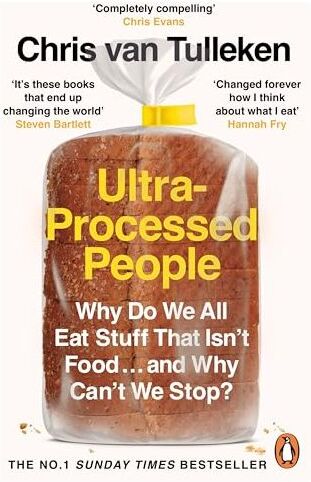
Penguin Ultra-Processed People: Why Do We All Eat Stuff That Isnt Food … and Why Cant We Stop?NOW WITH TWO BONUS CHAPTERS INCLUDING AN FAQTHE NUMBER ONE SUNDAY TIMES BESTSELLERFORTNUM & MASON'S DEBUT FOOD BOOK OF THE YEAR 2024A TIMES AND SUNDAY TIMES SCIENCE BOOK OF THE YEAR 2023AN ECONOMIST, DAILY MAIL, GOOD HOUSEKEEPING and AMAZON BEST BOOK OF THE YEAR 2023SHORTLISTED FOR WATERSTONE'S BOOK OF THE YEAR 2023Chosen by the SUNDAY TIMES, GUARDIAN, FT and DAILY MAIL as one of their BEST SUMMER BOOKS OF 2023'If you only read one diet or nutrition book in your life, make it this one' Bee Wilson'A devastating, witty and scholarly destruction of the shit food we eat and why' Adam Rutherford---An eye-opening investigation into the science, economics, history and production of ultra-processed food. It's not you, it's the food. We have entered a new 'age of eating' where most of our calories come from an entirely novel set of substances called Ultra-Processed Food, food which is industrially processed and designed and marketed to be addictive. But do we really know what it's doing to our bodies?Join Chris in his travels through the world of food science and a UPF diet to discover what's really going on. Find out why exercise and willpower can't save us, and what UPF is really doing to our bodies, our health, our weight, and the planet (hint: nothing good). For too long we've been told we just need to make different choices, when really we're living in a food environment that makes it nigh-on impossible. So this is a book about our rights. The right to know what we eat and what it does to our bodies and the right to good, affordable food. Number 1 Sunday Times bestseller, August 202310,95 £*Shipping: 2,99 £Secure redirect to the provider
-
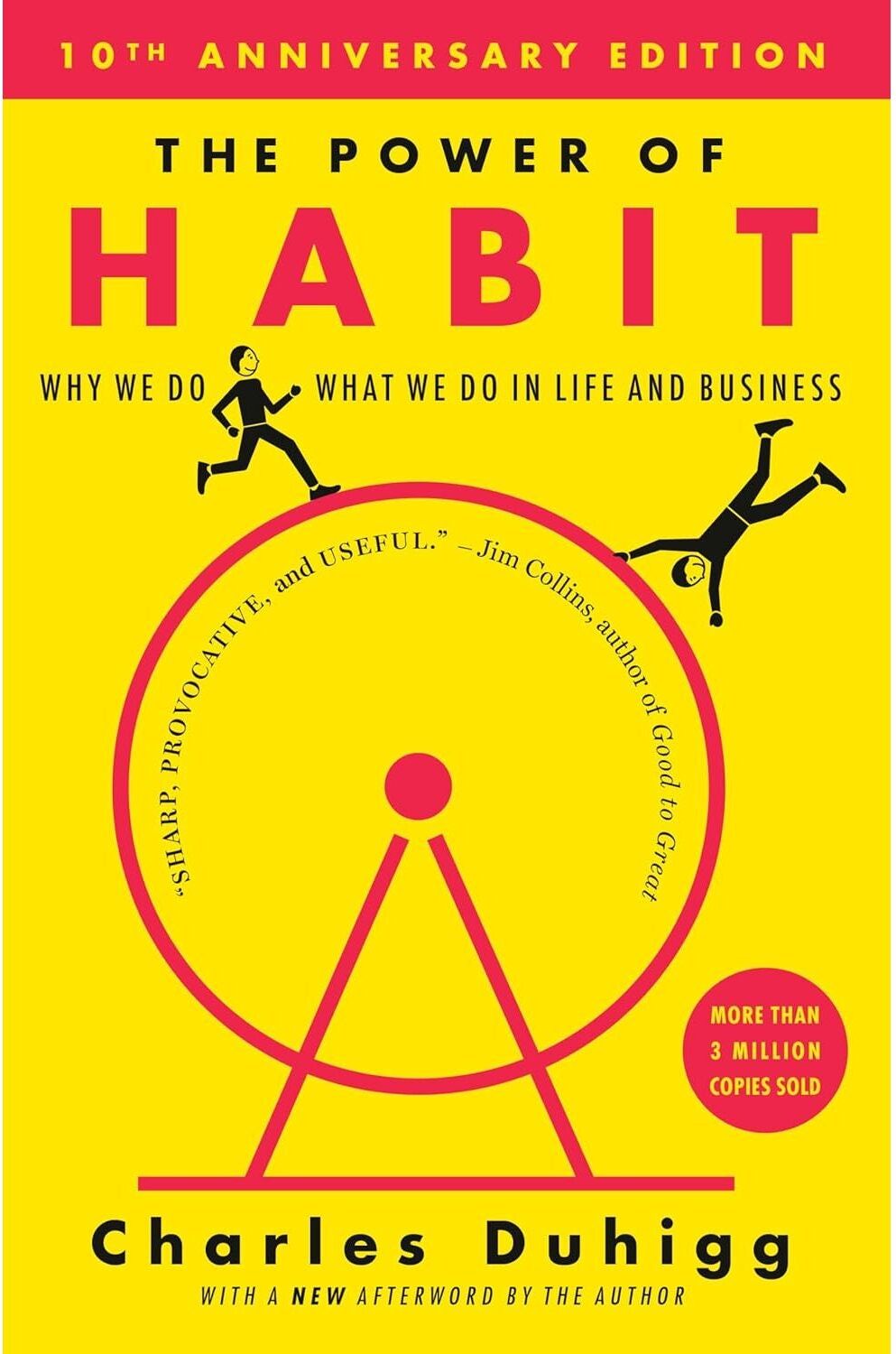
Random House Books The Power of Habit HARDBACK: Why We Do What We Do, and How to ChangeA WALL STREET JOURNAL AND FINANCIAL TIMES BEST BOOK OF THE YEAR In The Power of Habit, award-winning business reporter Charles Duhigg takes us to the thrilling edge of scientific discoveries that explain why habits exist and how they can be changed. Distilling vast amounts of information into engrossing narratives that take us from the boardrooms of Procter & Gamble to the sidelines of the NFL to the front lines of the civil rights movement, Duhigg presents a whole new understanding of human nature and its potential. At its core, The Power of Habit contains an exhilarating argument: The key to exercising regularly, losing weight, being more productive, and achieving success is understanding how habits work. As Duhigg shows, by harnessing this new science, we can transform our businesses, our communities, and our lives.9,49 £*Shipping: 2,99 £Secure redirect to the provider
-
Skip's Garage We The People Cornhole Boards"Includes: (2) ACA Regulation Size Cornhole Boards. Boards are Regulation 24"" Wide x 48"" Long. Easily Add All-Weather Resin Filled Bags. Add Accessories like a Carrying Case or Board Lights. Lights are Multicolor and Easily Change Colors & Modes."304,49 $*Shipping: 0,00 $Secure redirect to the provider


-
Why do we sometimes remember dreams that we once dreamt?
We sometimes remember dreams that we once dreamt because they may have been particularly vivid or emotionally charged. Our brains tend to prioritize memories that have a strong emotional impact, making them more likely to be retained. Additionally, if we wake up during or immediately after a dream, we are more likely to remember it as the memory is still fresh in our minds. Finally, certain factors such as stress, sleep quality, and overall mental health can also influence our ability to recall dreams. **
-
Why do we have the imagination of symptoms?
The imagination of symptoms can be a result of various factors such as anxiety, stress, or hypochondria. Our minds are powerful and can sometimes create physical sensations based on our thoughts and emotions. Additionally, our brains are wired to detect and respond to potential threats, which can sometimes lead to the perception of symptoms even when there is no actual physical cause. It is important to address these imagined symptoms by seeking support from healthcare professionals to differentiate between real and perceived health issues. **
-
Do we need goals and dreams that we want to achieve?
Yes, having goals and dreams is important as they provide direction and motivation in our lives. They give us a sense of purpose and help us stay focused on what we want to achieve. Setting goals also helps us to push ourselves beyond our comfort zones and grow as individuals. Dreams inspire us to reach for something greater and give us something to look forward to in the future. **
-
Where would we be without our dreams?
Without our dreams, we would lack motivation, inspiration, and direction in life. Dreams give us something to strive for, a sense of purpose, and a vision for the future. They drive us to set goals, work hard, and overcome obstacles. Without our dreams, life would lack the excitement and hope that comes from pursuing our passions and aspirations. **


Why do we feel such a terrible sensation when we die in dreams?
The sensation of dying in dreams can feel terrible because it triggers our primal fear of death and the unknown. Our subconscious mind often uses dreams to process our fears and anxieties, so experiencing death in a dream can be a way for our minds to confront these deep-seated fears. Additionally, the feeling of helplessness and loss of control that often accompanies death in dreams can contribute to the intense and unsettling sensation. **
Why do we feel such a horrible feeling when we die in dreams?
When we die in dreams, we often experience a horrible feeling because it triggers our primal fear of death and the unknown. Our subconscious mind may interpret the experience as a threat to our survival, leading to feelings of panic, helplessness, and anxiety. Additionally, the intense emotions we feel in dreams are often magnified due to the vivid and immersive nature of the dream state, making the experience even more distressing. **
Top-Angebote
Products related to We:
-
HARPERCOLLINS Lifespan: Why We Age and Why We Dont Have ToLifespan - Why We Age and Why We Dont Have To Description In this paradigm-shifting book from acclaimed Harvard Medical School doctor and one of TIME magazine's 100 most influential people on earth; Dr. David Sinclair reveals that everything we think we know about ageing is wrong; and shares the surprising; scientifically-proven methods that can help readers live younger; longer. For decades; the medical community has looked to a variety of reasons for why we age; and the consensus is that no one dies of old age; they die of age-related diseases. That's because ageing is not a disease - it is inevitable. But what if everything you think you know about ageing is wrong?What if ageing is a disease? And that disease is curable. In LIFESPAN; Dr. David Sinclair; one of the world's foremost authorities on genetics and ageing; argues just that. He has dedicated his life's work to chasing more than a longer lifespan - he wants to enable people to live longer; healthier; and disease-free well into our hundreds. In this book; he reveals a bold new theory of ageing; one that pinpoints a root cause of ageing that lies in an ancient genetic survival circuit. This genetic trick - a circuit designed to halt reproduction in order to repair damage to the genome -has enabled earth's early microcosms to survive and evolve into more advanced organisms. But this same survival circuit is the reason we age: as genetic damage accumulates over our lifespans from UV rays; environmental toxins; and unhealthy diets; our genome is overwhelmed; causing gray hair; wrinkles; achy joints; heart issues; dementia; and; ultimately; death. But genes aren't our destiny; we have more control over them than we've been taught to believe. We can't change our DNA; but we can harness the power of the epigenome to realise the true potential of our genes. Drawing on his cutting-edge findings at the forefront of medical research; Dr. Sinclair will provide a scientifically-proven roadmap to reverse the genetic clock by activating our vitality genes; so we can live younger longer. Readers will discover how a few simple lifestyle changes - like intermittent fasting; avoiding too much animal protein; limiting sugar; avoiding x-rays; exercising with the right intensity; and even trying cold therapy - can activate our vitality genes. Dr. Sinclair ends the book with a look to the near future; exploring what the world might look like - and what will need to change - when we are all living well to 120 or more. Dr. Sinclair takes what we have long accepted as the limits of human potential and mortality and turns them into choices. THE EVOLUTION OF AGEING is destined to be the biggest book on genes; biology; and longevity of this decade.7,95 £*Shipping: 2,99 £Secure redirect to the provider
-
Hodder Paperbacks Knockemout Series 3 Books Collection Set by Lucy Score (Things We Hide From The Light, Things We Left Behind & Things We Never Got Over)Things We Never Got Over Bearded, bad-boy barber Knox prefers to live his life the way he takes his coffee: Alone. Unless you count his basset hound, Waylon. Knox doesn’t tolerate drama, even when it comes in the form of a stranded runaway bride. Naomi wasn’t just running away from her wedding. She was riding to the rescue of her estranged twin to Knockemout, Virginia, a rough-around-the-edges town where disputes are settled the old-fashioned way…with fists and beer. Usually in that order. Things We Hide From The Light Police Chief Nash Morgan is known for two things: being a good guy and the way his uniform accentuates his rear end. But two bullets put a dent in his Southern charm and now he's facing a criminal still on the loose and a town full of citizens that consider the law more of a 'guideline'. The last thing he needs is the leggy, smart-mouthed Lina Solavita moving in next door, making him feel things he doesn't have the energy to feel. Lina is on a mission. As soon as she gets what she's after, she has no intention of sticking around. The town of Knockemout has other ideas. Soon she finds herself sucked into small-town life. Dog-sitting. Saying yes to a bridesmaid's dress. Listening to the sexy chief of police in the shower. Things We Left Behind Lucian Rollins is a lean, mean vengeance-seeking mogul. Determined to erase his abusive father's mark on his family name, he spends every waking minute pulling strings and building his empire. The more money and power he gains, the safer he feels. Except when it comes to one feisty small-town librarian. Although they are bonded by a dark secret from the past and their current mutual disdain, Sloane Walton only trusts Lucian as far as she can throw him. Until their bickering accidentally turns to foreplay, fanning flames of desire that can't be put out.10,99 £*Shipping: 2,99 £Secure redirect to the provider
-
Little, Brown Talking to Strangers: What We Should Know about the People We Don't Know by Malcolm GladwellTalking to Strangers How did Fidel Castro fool the CIA for a generation? Why did Neville Chamberlain think he could trust Adolf Hitler? Why are campus sexual assaults on the rise? Do television sitcoms teach us something about the way we relate to each other that isn't true? While tackling these questions, Malcolm Gladwell was not solely writing a book for the page. He was also producing for the ear. In the audiobook version of Talking to Strangers, you'll hear the voices of people he interviewed--scientists, criminologists, military psychologists. Court transcripts are brought to life with re-enactments. You actually hear the contentious arrest of Sandra Bland by the side of the road in Texas. As Gladwell revisits the deceptions of Bernie Madoff, the trial of Amanda Knox, and the suicide of Sylvia Plath, you hear directly from many of the players in these real-life tragedies. There's even a theme song - Janelle Monae's "Hell You Talmbout." Something is very wrong, Gladwell argues, with the tools and strategies we use to make sense of people we don't know. And because we don't know how to talk to strangers, we are inviting conflict and misunderstanding in ways that have a profound effect on our lives and our world.6,99 £*Shipping: 2,99 £Secure redirect to the provider
-
Penguin Ultra-Processed People: Why Do We All Eat Stuff That Isnt Food … and Why Cant We Stop?NOW WITH TWO BONUS CHAPTERS INCLUDING AN FAQTHE NUMBER ONE SUNDAY TIMES BESTSELLERFORTNUM & MASON'S DEBUT FOOD BOOK OF THE YEAR 2024A TIMES AND SUNDAY TIMES SCIENCE BOOK OF THE YEAR 2023AN ECONOMIST, DAILY MAIL, GOOD HOUSEKEEPING and AMAZON BEST BOOK OF THE YEAR 2023SHORTLISTED FOR WATERSTONE'S BOOK OF THE YEAR 2023Chosen by the SUNDAY TIMES, GUARDIAN, FT and DAILY MAIL as one of their BEST SUMMER BOOKS OF 2023'If you only read one diet or nutrition book in your life, make it this one' Bee Wilson'A devastating, witty and scholarly destruction of the shit food we eat and why' Adam Rutherford---An eye-opening investigation into the science, economics, history and production of ultra-processed food. It's not you, it's the food. We have entered a new 'age of eating' where most of our calories come from an entirely novel set of substances called Ultra-Processed Food, food which is industrially processed and designed and marketed to be addictive. But do we really know what it's doing to our bodies?Join Chris in his travels through the world of food science and a UPF diet to discover what's really going on. Find out why exercise and willpower can't save us, and what UPF is really doing to our bodies, our health, our weight, and the planet (hint: nothing good). For too long we've been told we just need to make different choices, when really we're living in a food environment that makes it nigh-on impossible. So this is a book about our rights. The right to know what we eat and what it does to our bodies and the right to good, affordable food. Number 1 Sunday Times bestseller, August 202310,95 £*Shipping: 2,99 £Secure redirect to the provider
-
Fantasy or imagination?
Fantasy and imagination are closely related but not the same. Imagination is the ability to form mental images, ideas, and sensations that are not present in reality, while fantasy is a genre of fiction that often involves magical or supernatural elements. Imagination is a fundamental cognitive process that allows us to think creatively and problem-solve, while fantasy is a specific type of creative expression. Both are important for creativity and innovation, but they serve different purposes in our cognitive and emotional lives. **
-
'Are we warned in dreams?'
Yes, some people believe that we can be warned in dreams. Some individuals report having dreams that seem to forewarn them of potential dangers or problems in their waking life. These warnings can come in the form of symbolic imagery or intuitive feelings within the dream. While not everyone may believe in the predictive nature of dreams, some people find that paying attention to their dreams can provide valuable insights and warnings about their lives. **
-
Why do we sometimes remember dreams that we once dreamt?
We sometimes remember dreams that we once dreamt because they may have been particularly vivid or emotionally charged. Our brains tend to prioritize memories that have a strong emotional impact, making them more likely to be retained. Additionally, if we wake up during or immediately after a dream, we are more likely to remember it as the memory is still fresh in our minds. Finally, certain factors such as stress, sleep quality, and overall mental health can also influence our ability to recall dreams. **
-
Why do we have the imagination of symptoms?
The imagination of symptoms can be a result of various factors such as anxiety, stress, or hypochondria. Our minds are powerful and can sometimes create physical sensations based on our thoughts and emotions. Additionally, our brains are wired to detect and respond to potential threats, which can sometimes lead to the perception of symptoms even when there is no actual physical cause. It is important to address these imagined symptoms by seeking support from healthcare professionals to differentiate between real and perceived health issues. **
Similar search terms for We
-
Random House Books The Power of Habit HARDBACK: Why We Do What We Do, and How to ChangeA WALL STREET JOURNAL AND FINANCIAL TIMES BEST BOOK OF THE YEAR In The Power of Habit, award-winning business reporter Charles Duhigg takes us to the thrilling edge of scientific discoveries that explain why habits exist and how they can be changed. Distilling vast amounts of information into engrossing narratives that take us from the boardrooms of Procter & Gamble to the sidelines of the NFL to the front lines of the civil rights movement, Duhigg presents a whole new understanding of human nature and its potential. At its core, The Power of Habit contains an exhilarating argument: The key to exercising regularly, losing weight, being more productive, and achieving success is understanding how habits work. As Duhigg shows, by harnessing this new science, we can transform our businesses, our communities, and our lives.9,49 £*Shipping: 2,99 £Secure redirect to the provider
-
Skip's Garage We The People Cornhole Boards"Includes: (2) ACA Regulation Size Cornhole Boards. Boards are Regulation 24"" Wide x 48"" Long. Easily Add All-Weather Resin Filled Bags. Add Accessories like a Carrying Case or Board Lights. Lights are Multicolor and Easily Change Colors & Modes."304,49 $*Shipping: 0,00 $Secure redirect to the provider
-
Skip's Garage We The People Cornhole Boards"Includes: (2) ACA Regulation Size Cornhole Boards. Boards are Regulation 24"" Wide x 48"" Long. Easily Add All-Weather Resin Filled Bags. Add Accessories like a Carrying Case or Board Lights. Lights are Multicolor and Easily Change Colors & Modes."345,49 $*Shipping: 0,00 $Secure redirect to the provider
-
Skip's Garage We The People Cornhole Boards"Includes: (2) ACA Regulation Size Cornhole Boards. Boards are Regulation 24"" Wide x 48"" Long. Easily Add All-Weather Resin Filled Bags. Add Accessories like a Carrying Case or Board Lights. Lights are Multicolor and Easily Change Colors & Modes."351,99 $*Shipping: 0,00 $Secure redirect to the provider
-
Do we need goals and dreams that we want to achieve?
Yes, having goals and dreams is important as they provide direction and motivation in our lives. They give us a sense of purpose and help us stay focused on what we want to achieve. Setting goals also helps us to push ourselves beyond our comfort zones and grow as individuals. Dreams inspire us to reach for something greater and give us something to look forward to in the future. **
-
Where would we be without our dreams?
Without our dreams, we would lack motivation, inspiration, and direction in life. Dreams give us something to strive for, a sense of purpose, and a vision for the future. They drive us to set goals, work hard, and overcome obstacles. Without our dreams, life would lack the excitement and hope that comes from pursuing our passions and aspirations. **
-
Why do we feel such a terrible sensation when we die in dreams?
The sensation of dying in dreams can feel terrible because it triggers our primal fear of death and the unknown. Our subconscious mind often uses dreams to process our fears and anxieties, so experiencing death in a dream can be a way for our minds to confront these deep-seated fears. Additionally, the feeling of helplessness and loss of control that often accompanies death in dreams can contribute to the intense and unsettling sensation. **
-
Why do we feel such a horrible feeling when we die in dreams?
When we die in dreams, we often experience a horrible feeling because it triggers our primal fear of death and the unknown. Our subconscious mind may interpret the experience as a threat to our survival, leading to feelings of panic, helplessness, and anxiety. Additionally, the intense emotions we feel in dreams are often magnified due to the vivid and immersive nature of the dream state, making the experience even more distressing. **
* All prices are inclusive of VAT and, if applicable, plus shipping costs. The offer information is based on the details provided by the respective shop and is updated through automated processes. Real-time updates do not occur, so deviations can occur in individual cases. ** Note: Parts of this content were created by AI.